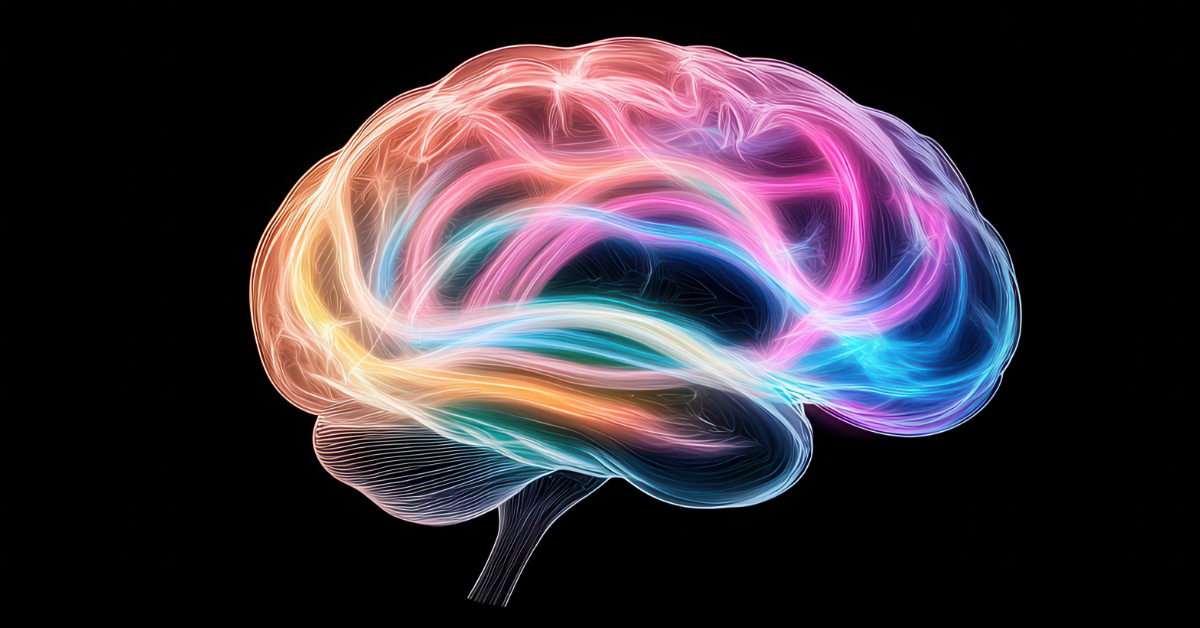
Have you ever wondered what’s actually happening in your brain during hypnosis? As a hypnotherapist, I’m fascinated by the neuroscience behind the experiences my clients report. Today, I want to share something that might surprise you about gamma waves – the fastest brain waves we produce – and their unexpected role in creating the hypnotic state.
The Gamma Wave Paradox
Here’s something counterintuitive: gamma waves (those rapid brain oscillations between 30-100 Hz) typically signal active thinking and alertness. Yet during deep hypnosis, gamma activity actually decreases in certain brain regions – particularly in the frontal midline area.
Why does this matter? This region acts as your brain’s “executive center,” handling analytical thinking and self-monitoring. When gamma activity quiets down here, it creates the perfect neurological conditions for the hypnotic experience. It’s like your inner critic and overthinking mind step aside, allowing for heightened suggestibility and that distinctive “hypnotic feeling” my clients often describe.
The Brain’s Hypnotic Symphony
Hypnosis isn’t just about gamma waves, of course. Your brain creates a beautiful orchestra of different wave patterns during trance states. While slower theta waves often dominate during hypnosis (creating that dreamy, receptive state), gamma waves play a supporting role by selectively modulating in specific brain regions.
In fact, research shows gamma and theta waves often synchronize during hypnosis – creating the perfect balance between relaxation and focused attention that makes hypnotherapy so effective.
Why This Matters For Your Experience
Understanding gamma waves helps explain why hypnosis feels so different from normal consciousness. When gamma activity shifts in certain brain regions, your perception changes. The neural networks that normally keep you anchored in analytical thinking reorganize, allowing for:
- Enhanced focus and absorption
- Reduced self-consciousness and overthinking
- Greater openness to therapeutic suggestions
- A distinctive sense of relaxed awareness
This is why clients often tell me hypnosis feels like “being fully present yet deeply relaxed” – a state that’s neurologically distinct from both normal wakefulness and sleep.
Individual Differences in Hypnotizability
Ever wonder why some people slip easily into hypnosis while others find it challenging? Differences in how our brains naturally modulate gamma activity might be part of the answer. Research suggests that people who can readily adjust their gamma patterns may naturally experience deeper hypnotic states.
The good news? Like any skill, your brain can learn to shift more effectively into these patterns with practice. This is why self-hypnosis exercises and repeated sessions often lead to progressively deeper experiences.
What’s Next in Hypnosis Research?
The science of brain activity during hypnosis is still evolving. Some studies show gamma decreases during hypnosis while others show selective increases – reflecting the complexity of what’s happening in different brain networks during trance states.
As we learn more about these patterns, we’ll develop even more effective techniques for inducing and deepening hypnosis, especially for those who might initially find it challenging.
Final Thoughts
Next time you experience hypnosis, you might appreciate that your gamma waves are doing something quite special – selectively quieting in some regions while maintaining the perfect balance with slower rhythms to create that unique state of consciousness where therapeutic change becomes possible.
Hypnosis isn’t just relaxation – it’s a neurologically distinct state with its own brainwave signature. And gamma waves, paradoxically, help create this state by knowing when to step back and let the magic happen.
Have you experienced hypnosis before? Does understanding the brain science behind it make you more curious to try it? I’d love to hear your thoughts!