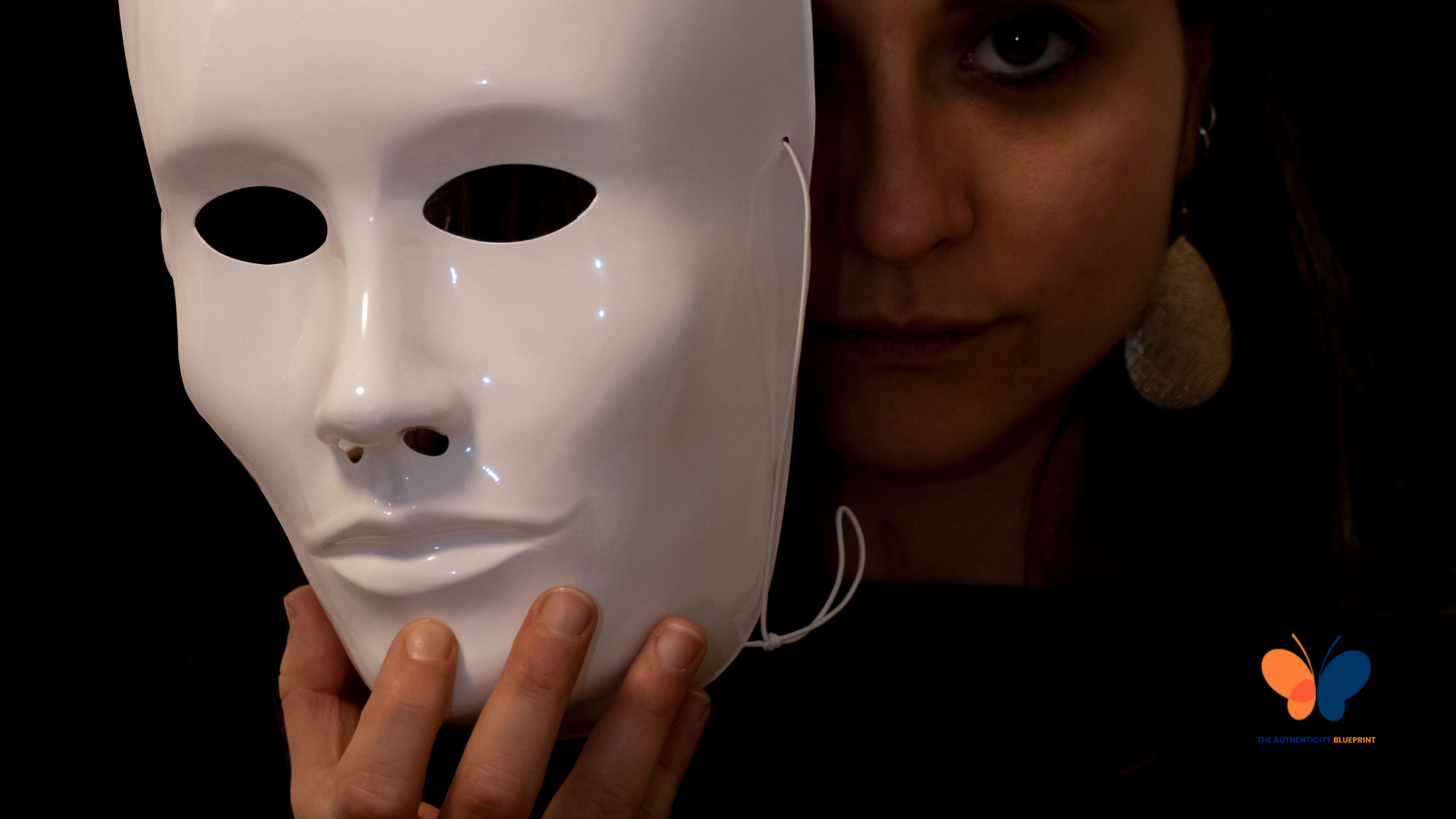
Angela had it all together.
Star student. Cheer captain. The one everyone leaned on.
But when the lights were off and she was finally alone, she felt hollow. Her smile was polished, her performance impeccable—but her body was screaming.
It wasn’t until her health started breaking down that she realized:
She’d been living as a version of herself she’d never chosen.
The High Cost of Pleasing Everyone but Yourself
If you’re a high achiever, chances are your nervous system learned early on that safety comes from performance.
Smile, achieve, adapt, repeat.
Not because you’re fake—because your survival once depended on it.
In MOSAEIC Hypnosis, we see this pattern often:
A client shows up exhausted, over-functioning, and anxious—then discovers they’ve built their identity around being liked rather than known.
This isn’t just psychology.
It’s your brain’s predictive coding gone into overdrive.
Your subconscious decided long ago: “It’s not safe to be real.”
What Dr. Gabor Maté Got Right (And Why Hypnosis Helps You Go Deeper)
Dr. Gabor Maté talks about the lifelong tug-of-war between two core human needs:
- Attachment: to be accepted and safe in relationships
- Authenticity: to live in alignment with your truth
As children, we almost always choose attachment. We hide our anger. We mute our needs. We become “easy” or “good” because we’re scared that being real might cost us connection.
But here’s the problem:
That mask hardens. And your nervous system starts treating authenticity like a threat.
That’s where hypnosis enters.
Hypnosis: The Bridge Back to Your Real Self
In hypnosis, we don’t just talk about the past—we revisit the emotional encoding of those early adaptations.
We slow down the cognitive noise and tune into the body—the tight jaw, the held breath, the gut that says no when your voice says yes.
That’s where memory reconsolidation happens.
We help your brain update the old belief:
“I can’t be myself and still belong.”
And replace it with:
“I’m safe to be seen, even if not everyone stays.”
Signs You’ve Been Trapped in a False Self:
- You feel guilty when you rest
- You say “yes” but resent it later
- You’re successful but emotionally numb
- You don’t even know what you want anymore—just what’s expected
Take It Further: 3 Hypnotic Micro-Practices for Coming Home to Yourself
1. Gut Check Pause
Set a 3x daily reminder: “What am I feeling in my body right now?”
This interrupts the autopilot of people-pleasing and gives your interoceptive system (your internal sensing network) a voice.
2. Mirror Statement
Look into your eyes in the mirror and say:
“You don’t have to perform to be loved.”
Feel what comes up. This activates your limbic system—and gives us something to process in trance work.
3. Recall & Rewrite
Journal about a time you hid your true feelings to keep the peace.
Then imagine that younger you whispering the truth.
In session, we guide this into deep revision—not just remembering, but rewiring.
One Final Thought
Authenticity isn’t about being loud or rebellious.
It’s about no longer abandoning yourself in subtle, habitual ways.
Hypnosis helps you meet the moment you first split from your truth—and give it a different ending.
That’s not regression. That’s re-integration.
Because underneath the high-functioning mask…
There’s someone vivid, intuitive, and wildly alive.
And she’s ready to return.
Want to go deeper?
That’s what we do inside MOSAEIC Hypnosis Labyrinth—guided experiences to gently unmask, reconnect, and rebuild your identity on your own terms.
You’re not too much.
You were just edited too early.
Let’s change that.