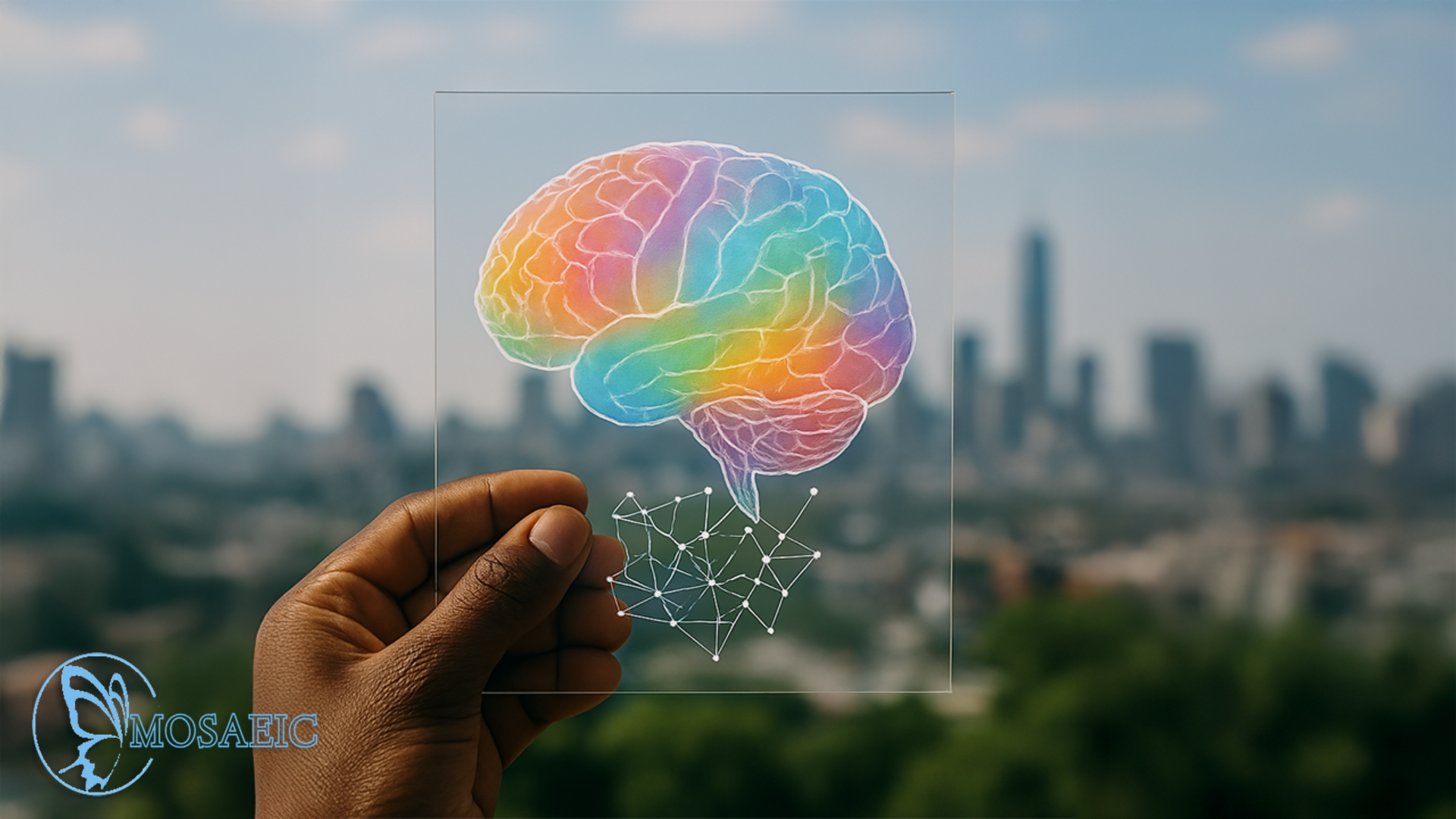
Breaking Free From Your Mind’s Hidden Rulebook
You know that feeling when your creative vision is crystal clear, but something keeps holding you back?
That brilliant design concept you can’t seem to start. The career pivot you’ve planned for years but haven’t made. The authentic voice you know is inside you, buried beneath layers of “shoulds” and “can’ts.”
What if I told you this isn’t about motivation or discipline, but about invisible rules your brain follows without your permission?
As a cognitive neuroscientist and hypnotherapist, I’ve spent years helping visionary creatives break free from these hidden mental barriers. Today, I want to share what’s actually happening in your brain when you feel stuck—and how hypnotherapy creates change in ways traditional approaches simply can’t.
The Invisible Architecture of Your Thinking
Imagine you’re working in graphic design software you’ve used for years. You know the shortcuts, the workflows, the tricks—they’re automatic. You don’t think about them; your fingers just know what to do.
Now imagine trying to unlearn those patterns. Tough, right?
Your mind works the same way. Through years of experience, it has built automatic patterns for everything from how you respond to criticism to how you approach creative challenges. These patterns operate below your awareness, like code running in the background of your mental computer.
As Dr. Mani Saint-Victor explains in his research: “These aren’t just thoughts—they’re neurological pathways that determine what feels possible versus impossible, safe versus dangerous.”
Why “Just Think Differently” Doesn’t Work
Have you tried positive thinking, affirmations, or just “pushing through” creative blocks? How did that work out?
Here’s why these approaches often fail: They target your conscious mind (the user interface), not your unconscious processes (the operating system).
It’s like trying to fix a computer bug by typing really nicely into the word processor. Wrong level of intervention!
The Science of Lasting Mental Change
Two powerful scientific frameworks explain how hypnotherapy creates change where other methods fail:
The Simulation-Adaptation Theory(SATH)
Your brain is constantly making predictions about what’s happening and what will happen next. When you’ve had negative experiences around creative risk-taking or self-expression in the past, your brain predicts similar outcomes in the future.
For example, if showcasing your work led to harsh criticism in design school, your brain might automatically predict “danger” whenever you consider sharing new ideas—triggering anxiety or procrastination to protect you.
Hypnotherapy allows your brain to simulate new experiences so vividly that it begins updating these predictions. When your brain experiences a scenario where sharing work leads to connection and opportunity instead of rejection, it starts predicting different outcomes in real life too.
The Representational Redescription Model
Ever notice how hard it is to explain exactly why you’re stuck? That’s because these patterns exist as implicit knowledge—you feel them but can’t articulate them.
Representational redescription is the process of transforming these invisible patterns into conscious awareness where they can be changed.
It’s like being able to finally open up your mental “settings panel” and change the default configurations that have been running your creative life.
What Makes Hypnotherapy Different: Getting Under the Hood
Traditional approaches often keep bumping against the same wall: they can’t access the operating system where these patterns live. Hypnotherapy creates a unique mental state where that access becomes possible.
Creating a Workshop for Your Mind
Think of hypnosis as temporarily relocating your consciousness to a mental workshop where you can:
- See the invisible: Patterns and beliefs that normally operate outside awareness become visible
- Test without risk: Try new responses in a simulation space before implementing them in real life
- Rewire directly: Change connections at the neural level, not just at the thought level
As one creative director described after our work together: “It was like finally finding the instruction manual to my own brain. Suddenly I could see exactly why I kept sabotaging my biggest projects—and more importantly, how to stop.”
How This Process Unfolds
Let me walk you through what actually happens during this work:
1. The Relaxation Gateway
First, you’ll experience a comfortable relaxation that quiets the “noise” of your everyday thinking. This isn’t about zoning out—it’s about gaining focused access to parts of your mind usually drowning in mental chatter.
“The hypnotic state creates a neurological environment where adaptive learning accelerates dramatically,” Dr. Mani notes in his research on neural plasticity and hypnotherapy.
2. Simulation That Rewires Reality
Once in this receptive state, you’ll experience vivid mental simulations that directly challenge limiting patterns:
- What if you could present your ideas with complete confidence?
- What if creative flow was your default state rather than the exception?
- What if feedback actually felt valuable rather than threatening?
Your brain doesn’t merely imagine these scenarios—it experiences them at a neural level, creating new pathways that become available in your everyday life.
3. From Implicit to Explicit and Back Again
The magic happens when those underground patterns become conscious, get updated, and then return to automatic processing—but now working for you rather than against you.
I call this the “learn-unlearn-relearn” cycle:
- Learn what’s really driving your creative blocks
- Unlearn the limiting connections
- Relearn new, empowering patterns
A designer I worked with put it perfectly: “It’s like my creative anxiety got reformatted. Before, showing my work felt like walking naked onto a stage. Now it feels like sharing something valuable with people who need it. Same action, completely different internal experience.”
Real Transformations Beyond Creative Blocks
This approach creates profound shifts across many areas where traditional approaches fall short:
Impostor Syndrome
Instead of trying to argue with the feeling of being a fraud, hypnotherapy updates the underlying prediction system that generates the feeling in the first place.
Perfectionism
Rather than just recognizing perfectionism intellectually, you’ll experience what it feels like when your brain no longer equates mistakes with danger or worth.
Procrastination
When your neural pathways no longer associate creative work with the risk of failure or judgment, procrastination often dissolves naturally—no willpower required.
A Note About My Approach
As both a physician and cognitive neuroscientist specializing in hypnotherapy, I bring a unique perspective to this work. My approach integrates cutting-edge neuroscience with time-tested hypnotherapeutic techniques.
This isn’t about quick fixes or magical thinking—it’s about working with your brain’s natural learning processes to create lasting change. Every technique I use is grounded in our understanding of how neural pathways form, adapt, and change.
What Becomes Possible
Imagine waking up and automatically reaching for your creative work—not because you’re forcing yourself, but because it feels like the most natural thing in the world.
Imagine presenting your ideas with the quiet confidence that comes from genuine inner alignment, not forced “confidence techniques.”
Imagine feedback becoming genuinely useful information rather than triggering an emotional tailspin.
These aren’t just nice ideas—they’re the actual experiences reported by creative professionals I’ve worked with who have undergone this transformative process.
Is This For You?
If you’ve tried traditional approaches without lasting success, if you’re tired of knowing what you “should” do but still not being able to do it, if you’re ready for change that happens from the inside out rather than just behavior modification…
…then this approach might be exactly what you’ve been looking for.
The visionary creativity you’re capable of isn’t just a nice idea—it’s already within you, waiting for the right conditions to emerge. Hypnotherapy creates those conditions by updating the very neural architecture that’s been holding you back.
Your creative breakthrough isn’t waiting for more information, more techniques, or more willpower.
It’s waiting for a different approach altogether.