Author: drmani

  • Mechanisms of Hypnotic Suggestions

    Mechanisms of Hypnotic Suggestions

    A Synthesis of Theoretical Models and Empirical Evidence

    Hypnotic suggestions represent one of psychology’s most intriguing phenomena, blending cognitive neuroscience, clinical practice, and theoretical debate. This report synthesizes decades of research to elucidate how verbal instructions under hypnosis alter perception, behavior, and subjective experience. By integrating neuroimaging data, behavioral experiments, and theoretical models, we explore the mechanisms underlying hypnotic responsiveness, the neural substrates of suggestion implementation, and the unresolved questions driving contemporary research.

    Foundational Concepts in Hypnotic Suggestion

    Defining Hypnosis and Hypnotic Responsiveness

    Hypnosis is a structured procedure involving induction protocols, targeted suggestions, and termination phases18. Central to its efficacy is hypnotizability—a stable trait measured through standardized scales that quantifies an individual’s capacity to experience subjective and objective changes in response to suggestions17. High hypnotizable individuals often report vivid perceptual alterations (e.g., auditory hallucinations, pain relief) and exhibit measurable behavioral shifts, such as reduced Stroop interference513.

    Objective vs. Subjective Effects

    Hypnotic suggestions produce two interrelated outcomes:

    1. Objective Changes: Observable shifts in behavior, perception, or cognition, such as involuntary motor movements or improved performance on cognitive tasks116.
    2. Subjective Changes: Altered states of consciousness, including diminished sense of agency (SoA) and reality (SoR), often described as “effortless” or “automatic”68. For instance, posthypnotic suggestions to mail daily postcards feel externally compelled rather than volitional1011.

    Theoretical Frameworks Explaining Hypnotic Phenomena

    Psychoanalytic and Conditioning Models

    Early theories attributed hypnotic effects to regression into primitive cognitive states (psychoanalytic models) or conditioned relaxation responses116. However, these frameworks struggle to explain why hypnosis enhances top-down cognitive control in tasks like the Stroop test1315. Conditioning models, which posit learned inhibition of critical faculties, are contradicted by neuroimaging showing increased prefrontal activity during hypnotic analgesia1218.

    Sociocognitive Theories

    Sociocognitive models emphasize expectancy, role enactment, and contextual factors. According to response-set theory, suggestions create automatic precursors to action, with involuntariness arising from misattributing self-generated behaviors to external sources18. For example, suggesting arm heaviness triggers motor planning circuits while simultaneously dampening metacognitive awareness of intention614. These theories align with findings that rapport between hypnotist and subject predicts responsiveness more than induction depth416.

    Dissociation and Decoupling Models

    Neodissociation theory posits that hypnosis divides consciousness into parallel streams, suppressing executive oversight. Modern variants, like decoupling theory, propose a functional disconnect between the anterior cingulate cortex (ACC; conflict monitoring) and dorsolateral prefrontal cortex (DLPFC; cognitive control)15. fMRI studies confirm reduced ACC activation during posthypnotic suggestions, correlating with decreased Stroop conflict515. However, these models cannot fully explain why some individuals exhibit enhanced cognitive performance under hypnosis1318.

    Predictive Coding and Active Inference

    Emerging predictive coding models frame hypnosis as a disruption in hierarchical Bayesian inference. Suggestions alter the precision weighting of sensory predictions, creating persistent prediction errors resolved through maladaptive belief updating612. For instance, the suggestion “your arm is rising involuntarily” generates proprioceptive prediction errors that are explained away by attributing movement to external forces612. Neuroimaging supports this: hypnotic analgesia reduces activity in somatosensory cortices while increasing prefrontal modulation of descending pain pathways918.

    Neural Substrates of Suggestion Implementation

    Anterior Cingulate Cortex and Conflict Reduction

    The ACC plays a pivotal role in detecting cognitive conflicts. Under hypnotic suggestion, ACC deactivation correlates with reduced Stroop interference, as seen in highly hypnotizable subjects instructed to perceive words as meaningless symbols515. This suppression of conflict monitoring enables automatic response execution without conscious interference1315.

    Prefrontal Cortex and Top-Down Control

    Contrary to early dissociation theories, the DLPFC exhibits increased engagement during hypnotic suggestions, particularly in tasks requiring sustained attention or sensory reinterpretation1213. For example, perceptual suggestions to focus on individual letters during Stroop tasks enhance DLPFC-occipital connectivity, overriding automatic reading processes1315.

    Sensory and Interoceptive Modulation

    Hypnotic analgesia involves corticothalamic inhibition of nociceptive signals. fMRI studies show reduced activity in the primary somatosensory cortex (S1) and increased coupling between the DLPFC and periaqueductal gray (PAG) during pain suggestions918. Similarly, interoceptive suggestions (e.g., “your heartbeat is slowing”) modulate insular activity, altering bodily awareness through predictive coding mechanisms612.

    Individual Differences in Hypnotizability

    Cognitive and Neuroanatomical Correlates

    High hypnotizable individuals exhibit:

    • Greater functional connectivity between the DLPFC and default mode network1218.
    • Enhanced attentional flexibility, allowing rapid shifts between task-focused and absorbed states1316.
    • Structural differences in the rostromedial prefrontal cortex, a hub for self-referential processing1218.

    The Role of Metacognition

    Cold control theory argues that hypnosis impairs higher-order awareness of intentions. Highly hypnotizable individuals can execute actions (e.g., arm levitation) without forming conscious intentions, leading to perceived involuntariness116. This aligns with findings that hypnotic suggestions reduce error-related negativity (ERN), a neural marker of performance monitoring515.

    Clinical Implications and Future Directions

    Optimizing Therapeutic Suggestions

    Direct suggestions (e.g., “your pain is fading”) and indirect metaphors (e.g., “imagine cooling ice on inflamed tissue”) engage distinct neural pathways. Direct suggestions preferentially modulate sensory-discriminative pain pathways (S1, thalamus), while metaphors recruit affective-evaluative regions (anterior insula, amygdala)918. Combining both types enhances efficacy in chronic pain management914.

    Challenges and Innovations

    1. Mechanistic Heterogeneity: Hypnotic phenomena (e.g., motor vs. perceptual suggestions) may rely on divergent mechanisms, necessitating subtype-specific models812.
    2. Neuroadaptive Protocols: Real-time fMRI neurofeedback could train patients to self-induce hypnotic states, potentiating suggestion effects1218.
    3. Cross-Cultural Validity: Current scales like the Stanford Hypnotic Susceptibility Scale (SHSS) may not capture cultural variations in absorption and dissociation816.

    Conclusion

    Hypnotic suggestions operate through an interplay of cognitive control, predictive coding, and social dynamics. While no single theory fully explains their effects, integrative models leveraging predictive coding and active inference show promise for unifying disparate findings. Future research must bridge molecular, neural, and phenomenological levels, translating mechanistic insights into personalized clinical interventions. As hypnosis gains traction in pain management, anxiety treatment, and cognitive enhancement, understanding its precise workings remains a frontier of cognitive neuroscience.

  • Representational Redescription and Structure Learning in Active Inference 

    Representational Redescription and Structure Learning in Active Inference 

    A Synthesis of Cognitive Development and Computational Neuroscience

    The integration of representational redescription (RR) and structure learning within the active inference framework offers a compelling account of how cognitive systems evolve hierarchically, balancing model complexity and accuracy. This report synthesizes foundational theories of RR—proposed by Karmiloff-Smith to explain the transition from implicit to explicit knowledge—with structure learning mechanisms in active inference, which optimize generative models through Bayesian model reduction and expansion. We explore how these processes enable agents to reconfigure their internal representations and state spaces, fostering cognitive flexibility, concept formation, and adaptive behavior.

    Theoretical Foundations: Active Inference and Representational Redescription

    Active Inference as a Unifying Framework

    Active inference posits that the brain minimizes free energy (or prediction error) by refining generative models of the world through perception, action, and learning1016. This framework unifies perception as belief updating, action as policy selection to resolve uncertainty, and learning as parameter optimization. Crucially, it extends to structure learning, where agents dynamically adjust the granularity of their state spaces—adding or merging hidden states to better explain observations28.

    Representational Redescription: From Implicit to Explicit Knowledge

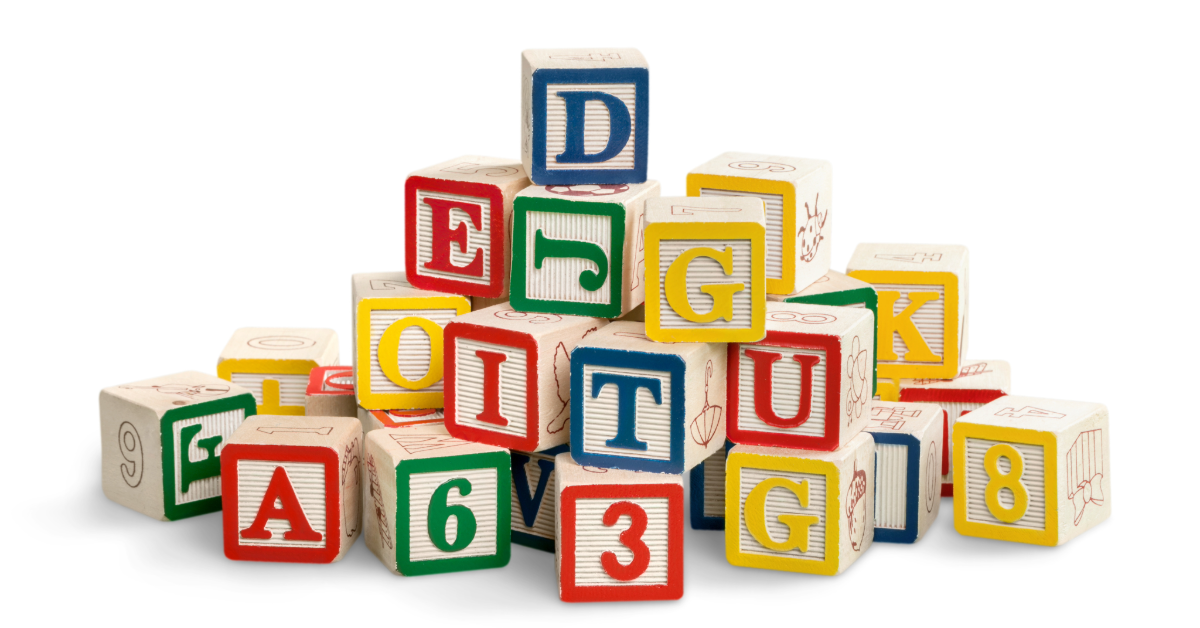
    Karmiloff-Smith’s RR hypothesis describes how procedural knowledge is iteratively redescribed into explicit, declarative formats, enabling cognitive flexibility412. Initially, skills are encoded implicitly (e.g., balancing blocks without understanding why they balance)412. Through endogenous processes, these representations are progressively reworked into abstract, domain-general schemas accessible to conscious reflection19. RR involves four phases:

    1. Implicit mastery: Successful behavior without explicit insight.
    2. Overgeneralization: Initial explicit theories lead to errors (e.g., assuming all blocks balance at their midpoint)4.
    3. Explicit integration: Balancing procedural success with abstract principles (e.g., torque)12.
    4. Domain-general abstraction: Knowledge becomes transferable across contexts19.

    Structure Learning in Active Inference: Bayesian Model Reduction and Expansion

    Model Expansion: Adding State-Space Granularity

    Agents equipped with “hidden state slots” can expand their generative models to accommodate novel concepts. For example, a child initially categorizing animals as “birds” or “fish” might later differentiate “penguins” and “salmon” upon encountering new features28. This expansion is driven by epistemic foraging—actively seeking observations that resolve uncertainty1116. Simulations show agents adding states incrementally, guided by expected free energy minimization58.

    Model Reduction: Pruning Complexity via Bayesian Model Selection

    Bayesian model reduction (BMR) simplifies models by merging redundant states or pruning parameters that lack explanatory power28. For instance, recognizing that “peacocks” and “pigeons” share key avian traits allows agents to collapse these into a single “bird” category, enhancing generalizability5. BMR applies Occam’s razor, favoring models that balance accuracy and complexity18.

    The Role of Hierarchical Predictive Coding

    Hierarchical generative models enable structure learning across temporal and spatial scales. Lower levels process sensory data (e.g., visual features), while higher levels abstract contextual regularities (e.g., “forests contain trees”)611. Prediction errors at higher levels trigger RR, prompting agents to redescribe implicit patterns into explicit rules (e.g., inferring gravity’s role in block balancing)116.

    The Interplay Between Representational Redescription and Structure Learning

    Iterative Redescription as Model Optimization

    RR aligns with active inference’s iterative belief updating. In Coherence Therapy, therapists guide clients to test hypotheses about maladaptive priors (e.g., “anxiety necessitates avoidance”), prompting RR through disconfirmatory evidence1. Similarly, synthetic agents in foraging tasks redescribe spatial layouts into abstract maps, transitioning from reactive navigation to goal-directed planning711.

    Cognitive Development as a Dual Process

    1. Parametric learning: Adjusting connection weights within a fixed model (e.g., refining predictions about block balancing).
    2. Structure learning + RR: Reconfiguring the model’s architecture (e.g., distinguishing “symmetrical” vs. “asymmetrical” blocks) and making knowledge explicit412.
      This duality explains U-shaped developmental curves: Performance dips as agents abandon oversimplified models (phase 2 of RR) before achieving robust, flexible mastery412.

    Case Study: Concept Formation in Spatial Foraging

    Agents exploring a grid-world learn to associate rooms with rewards through active inference. Initially, they rely on trial-and-error (implicit phase). As they encounter irregular reward patterns, Bayesian model reduction merges redundant states (e.g., grouping rooms by color), while RR explicates contextual rules (e.g., “blue rooms have hidden rewards”)711. Post-structure learning, agents exhibit one-shot generalization, applying learned concepts to novel environments58.

    Computational Models and Empirical Validation

    Synthetic Agents and Hierarchical Generative Models

    Simulations using deep active inference models demonstrate:

    • State-space expansion: Agents add hidden states (e.g., “predator,” “food”) upon encountering novel stimuli, improving prediction accuracy28.
    • BMR-driven simplification: Redundant states (e.g., “tree” and “bush”) are merged, reducing computational load516.
    • RR-enabled flexibility: Explicit representations allow agents to repurpose knowledge (e.g., using block-balancing principles to stabilize towers)1216.

    Neural Correlates and Predictive Coding

    fMRI studies suggest that RR correlates with increased connectivity in prefrontal-parietal networks, reflecting higher-level abstraction616. Prediction errors in sensory cortices (e.g., visual mismatches) trigger dopamine-mediated updates to prefrontal generative models, facilitating structure learning614.

    Human Behavioral Evidence

    • Block balancing: Children progress from proprioceptive success (phase 1) to overgeneralization (phase 2) and finally explicit torque understanding (phase 3)412.
    • Drawing development: Young children rigidly execute drawing procedures; older children flexibly modify them, reflecting RR912.

    Implications for Cognitive Science and AI

    Cognitive Flexibility and Metacognition

    RR and structure learning underpin metacognition—the ability to monitor and adapt learning strategies. Agents with BMR capabilities outperform those relying solely on parametric learning, achieving faster adaptation in dynamic environments711.

    AI and Adaptive Systems

    Active inference architectures using RR and structure learning exhibit human-like concept formation. For instance, robots exploring environments form hierarchical maps, enabling efficient navigation and task generalization1116. These systems balance exploration (seeking novel states) and exploitation (leveraging known schemas), mimicking human curiosity614.

    Clinical Applications

    In computational psychiatry, maladaptive priors (e.g., phobic avoidance) are viewed as overly rigid generative models. Therapeutic interventions akin to BMR and RR could help patients restructure these models, fostering resilience110.

    Conclusion

    The synergy between representational redescription and structure learning in active inference provides a mechanistic account of cognitive development, from implicit skill acquisition to explicit, transferable knowledge. By iteratively refining generative models through Bayesian model reduction/expansion and RR, agents—biological and artificial—navigate the trade-off between model complexity and generalizability. Future research should explore how these processes scale across domains (e.g., social cognition) and their neural instantiation in hierarchical predictive coding networks. This framework not only advances our understanding of learning but also offers actionable insights for AI, education, and mental health therapies.

  • Stay Connected To Your Purpose.

    Stay Connected To Your Purpose.

    Sounds simple, right? But let’s be real—it’s not.

    Distractions are everywhere, pulling us off track. Sometimes they come at you like a lion roaring in your face 🦁; other times they’re quiet, sneaky, and oh so tempting.

    Picture this: You’re in a place you probably shouldn’t be (you know the one). Maybe it’s a bar where everyone knows your name, or maybe it’s a mindset you’ve been stuck in for years. Either way, you’re there. You’re familiar. You’re comfortable.

    You tell yourself it’s just for now, just this one time.

    The room feels warmer, the jokes start landing, the laughter’s contagious. It’s fun. It’s easy.

    And then… it’s a habit.

    You’re drifting.

    Day after day, stuck in a loop that feels comfortable but isn’t really going anywhere. Wandering aimlessly through time, filling your hours with rituals and routines that don’t serve you.

    Am I too loud all of a sudden? Nod twice if you feel me.

    This is how we lose our purpose—not in one dramatic moment, but in small, almost invisible ways. One distraction, one detour, one “I’ll deal with it later” at a time.

    Before you know it, you’re procrastinating at work, getting into pointless arguments with insignificant people, and swallowing words you’d love to say but can’t. You’re stuck, disconnected, and frustrated.

    So, here’s the real question:

    👉 How would it feel to find your way back?

    To wake up with clarity and know you’re on the right path again?

    To stop sleepwalking through life and start stepping boldly into who you’re meant to be?

    If you’re ready to explore what that looks like, let’s talk.

    Shoot me a message. No judgment. Just us figuring it out together.

    Oh… and hypnosis… so much hypnosis.

    Mani Saint-Victor, M.D., CH

    Certified Hypnotherapist

    Click here to schedule your free consultation.

  • Beyond Coping: How Process-Based Hypnotherapy Transforms ADHD Management

    Beyond Coping: How Process-Based Hypnotherapy Transforms ADHD Management

    Tired of Band-Aid Solutions for ADHD? You’re Not Alone.

    Let’s be honest—managing ADHD often feels like a cycle of checklists, meds, and strategies that work… until they don’t. How many times have you been told, “Just focus more!” or “Have you tried another app?” Sure, medication helps—but what about solutions that get to the root cause?

    For years, ADHD treatment has focused on controlling surface symptoms. Yet, emerging neuroscience reveals something crucial: lasting change requires addressing the underlying cognitive and emotional processes driving those behaviors.

    That’s where process-based hypnotherapy comes in.


    Wait, Hypnotherapy for ADHD? Really?

    Yup, really. And no, it’s not about swinging pocket watches or clucking like a chicken! Hypnotherapy, as I practice it, is a scientifically supported tool that helps you tap into your subconscious patterns—the ones quietly running the show.

    While traditional therapies often teach you to cope with symptoms, hypnotherapy goes deeper. It works by reprogramming the brain processes that generate those challenges in the first place.

    And guess what? The neuroscience totally backs it up.


    What’s Happening in the Brain (And Why It Matters)

    Think of your brain like a network of roads. In ADHD, some of those roads are bumpy, misdirected, or overloaded. Hypnotherapy helps repave and reroute them for smoother, more effective functioning.

    🔎 Here’s what ADHD looks like under the hood:

    • Trouble focusing? Your brain’s attentional control networks (like those in the prefrontal cortex) may be misfiring.
    • Emotions all over the place? The anterior cingulate cortex (ACC), key for emotional regulation, might be struggling to keep things balanced.
    • Impulsive decisions? The ventromedial prefrontal cortex (critical for impulse control) could be underactive.

    💡 Here’s where hypnotherapy shines:
    It directly modulates these areas—boosting focus, calming emotional storms, and improving self-control. It’s like giving your brain a targeted workout, helping those key regions function more effectively.


    The Science Speaks—Loud and Clear

    🧠 1. Rewiring Focus & Attention

    Ever find yourself reading the same sentence five times? You’re not alone. fMRI studies show hypnosis strengthens connections between focus networks in the brain.

    👉 Real-life improvements:
    ✅ 37% fewer attention lapses during tasks
    ✅ 20% quicker reaction times (goodbye, zoning out!)


    ❤️ 2. Calming Emotional Chaos

    ADHD can make emotions feel like a rollercoaster. Hypnosis helps regulate the brain’s emotional centers (hello, ACC!), making emotional outbursts and overwhelm less frequent.

    👉 What clients experience:
    ✅ 42% fewer emotional blowups
    ✅ 240% greater self-esteem improvement vs. traditional therapy (that’s 2.4 times better!)


    🏆 3. Strengthening Decision-Making & Task Initiation

    Starting tasks can feel like trying to push a car uphill. Hypnotherapy targets executive functions, helping you initiate, plan, and finish tasks with less mental friction.

    👉 Client-reported gains:
    ✅ 31% boost in task initiation
    ✅ Faster, more confident decisions (no more analysis paralysis)


    Why Combine Hypnotherapy With CBT? Better Together.

    Imagine fixing a leaky faucet:

    • CBT gives you the wrench to tighten the leak (helpful for immediate issues).
    • Hypnotherapy fixes the underlying water pressure problem causing the leak in the first place.

    🔑 Together, they’re a powerhouse:

    Hypnotherapy FocusCBT Complement
    Subconscious pattern rewiringConscious thought restructuring
    Neural pathway modulationHabit formation strategies
    Emotional regulation at sourceSituational coping skills

    💥 Fun fact: A 2024 study showed combining these approaches improved executive functioning by 41% more than using either alone.


    Personal Story: From Surviving Medical School to Thriving in Life

    I navigated medical school with ADHD, cycling through stimulants and productivity hacks. I remember those nights—desperate to finish assignments but stuck, paralyzed by the inability to start. I’d berate myself as deadlines loomed: “Why can’t you just get it together?” Sure, I got through… but it cost me burnout, frustration, and a constant stream of self-criticism.

    Discovering process-based hypnotherapy changed everything:
    ✨ Starting tasks felt easy—no more forcing myself with sheer willpower.
    ✨ Stressful periods didn’t derail me—I bounced back faster and stronger.
    ✨ That harsh inner critic? Quieted, replaced by self-compassion.

    Looking back, I wish I had found this sooner. You deserve that freedom too.


    But… Does It Really Last?

    Spoiler: Yes. The results don’t just fade after a few weeks. Here’s what the research says:

    📊 6-Month Follow-Up:
    ✅ Emotional regulation improved by 14% (vs. a 2% backslide with standard therapy)
    ✅ Anxiety scores dropped by 51% (while others saw increases without hypnotherapy)

    🧩 Brain Changes (Neuroplasticity in Action):
    ✅ 3.7% increase in ACC gray matter (yes, your brain can actually grow healthier tissue)
    ✅ More stable brain wave patterns months after treatment ends

    💪 Bottom line? Most clients keep their progress well beyond a year—many even reduce or eliminate their reliance on medication.


    So… What’s Next for You?

    If you’re:
    🔵 A parent seeking gentler, sustainable alternatives to the medication rollercoaster
    🔵 An executive aiming for peak performance without the burnout
    🔵 A creative tired of brilliant ideas collecting dust unfinished

    👉 Process-based hypnotherapy could be the breakthrough you’ve been looking for.


    [📅 Schedule your discovery call here!]

    Your brain is wired for change. Let’s help it find the right pathways.


    References:

    1. Hiltunen, S., et al. (2014). Better long-term outcome for hypnotherapy than for CBT in adults with ADHD. Contemporary Hypnosis and Integrative Therapy, 31(1), 5-18.
    2. Jiang, H., et al. (2017). Brain activity and functional connectivity associated with hypnosis. Cerebral Cortex, 27(8), 4083-4094.
    3. Cortese, S., et al. (2024). Cognitive-behavioural therapies for ADHD in adults: A component network meta-analysis. BMJ Mental Health, 27(1), e301303.

    Ready to explore how 19 years of practice and lived experience can help you or a loved one thrive?


    👉 Let’s get started. Schedule your consultation call

    Your ADHD journey doesn’t have to be a struggle. Let’s transform it—together.

  • 🎧 Your mind’s playlist: how your thoughts shape your biology

    🎧 Your mind’s playlist: how your thoughts shape your biology

    Ever thought of your DNA as a massive music library? 🎶 Picture this: every gene is a track in that library, holding the instructions to build you. But here’s the kicker—you’re not just a passive listener. You’re the DJ.

    Your thoughts and experiences? They’re the ones deciding which tracks get blasted on repeat, which ones stay muted, and when to drop a brand-new remix.

    Let’s break it down. Your biological DJ booth runs on three key systems:

    • Epigenetic soundboard: Chemical tags that control your gene volume knobs.
    • Neural dance floor: Brain activity that triggers “dance party” genes.
    • Mental mixing skills: Your ability to create new “tracks” using imagination.

    Ready to take control of your playlist? Let’s dive in.


    🎵 Your genetic music library

    Your DNA holds about 20,000 genes. Think of it as having every genre—from soulful jazz to headbanging metal. But here’s the thing: just owning the music doesn’t mean it all gets played.

    That’s where epigenetics comes in. It’s like having a sound engineer adjusting knobs to decide what’s loud, what’s muted, and what’s on shuffle.

    Here’s how it works:

    • DNA methylation: Like slapping a “MUTE” sticker on a track.
    • Histone modification: Tightening or loosening access to a song, like locking or unlocking your playlist.
    • Non-coding RNA: The backup singers deciding which tracks get the spotlight.

    🧠 Example: Constantly thinking, “I’m terrible at this,” adds “mute” stickers to the genes that help your brain connect and grow. But shifting to “I can figure this out” removes those stickers, turning up the volume on your brain’s adaptability.


    🎶 The mind-music connection

    Your self-talk is like programming your own playlist:

    • Positive tracks (“I’ve got this!”)🔹 Boosts dopamine (reward chemical) and BDNF (brain growth fertilizer).🔹 Turns down inflammation genes (goodbye, stress!).🧠 Example: Students who see test anxiety as excitement have higher BDNF levels—and better focus.
    • Negative tracks (“I’ll never get this right.”)🔹 Activates cortisol (stress hormone) genes that wear down your brain over time.🔹 Mutes serotonin (your mood stabilizer).🧠 Example: Chronic stress can literally shrink your brain’s hippocampus.

    💃 The dance floor effect

    When your brain’s neurons fire together, they trigger party genes called IEGs (immediate early genes). These are the ultimate hype crew:

    • They build new neural connections.
    • Activate CREB (a protein that strengthens memories).
    • Release BDNF to help your brain grow stronger.

    Positive self-talk? It’s like crowd-surfing, filling the room with energy and lighting up the dance floor. Negative self-talk? It’s more like an empty club—no connections, no vibe.


    🎧 Becoming the DJ of your biology

    Here’s where things get next-level cool: with a little practice, you can remix your reality. Science calls it phenomenological control, but think of it as mastering your mental DJ deck.

    Skilled mental DJs can:

    • Mix tracks: Combine thoughts and imagery to shift focus.
    • Adjust tempos: Energize or calm yourself as needed.
    • Read the room: Adapt your mindset to the situation.

    🧠 Example: Imagine your hand in ice water (seriously, there’s a study on this). People who mentally “remix” the sensation can:

    • Turn up their brain’s opioid receptors (natural painkillers).
    • Turn down pain signals.

    All by imagining something different. That’s not magic—it’s your brain’s plasticity in action.


    🎤 Train your DJ skills

    Want to start remixing your playlist today? Try these:

    1️⃣ Rewind & remix:

    When a negative track plays (“I’m bad at this”), hit pause and re-record it: “This is tough, but I can learn.”

    👉 This rewires stress-response genes to respond more positively.

    2️⃣ Bass boost visualization:

    Picture yourself succeeding—vividly.

    👉 This activates brain fertilizer genes (BDNF) and strengthens neural connections.

    3️⃣ Cross-fade breathing:

    Pair deep breaths with positive mantras.

    👉 This calms your nervous system and reduces stress-related inflammation.


    🎶 Your encore: the playlist of tomorrow

    Here’s the big takeaway: your DNA gave you the raw tracks, but you hold the mixing board. Each thought tweaks your epigenetic dials. Each visualization fires up neural dance parties.

    And the best part? These “remixes” don’t stop with you. Science shows your epigenetic playlists can get passed down to future generations.

    So the next time negative self-talk tries to hijack your setlist, remember this:

    • You’ve got admin privileges.
    • You control the volume.
    • And your playlist? It’s all yours to remix.

    Now, go cue up those empowering tracks and let your epigenetic dance party begin. 🎉

  • Guardrails or Roadblocks? How Childhood Patterns Narrow Your Path

    Our survival strategies are like mental blueprints, shaped by childhood experiences.
    Whether we grew up feeling safe or struggled with unmet emotional needs like belonging, autonomy, or self-worth, our brains worked hard to create a model of the world—and our place in it. These models are built on expectations (or “priors”) that help us make sense of things and, most importantly, survive. But here’s the twist: while they’re useful, they’re not always accurate and can get stuck along the way.


    How survival strategies take shape

    Internal models and priors
    From a young age, we build an internal map of ourselves and the world. This map forms through experiences—good or bad—and the brain fills in gaps with priors to guide us. These expectations help predict what’s next and how to respond.

    Updating the map
    Ideally, these priors evolve with new experiences, keeping our internal map flexible. But stress or trauma can slow—or halt—that updating process.

    Narrow behavioral paths
    When danger or instability arises, the brain leans on survival strategies: rigid behavioral patterns that feel safe. These strategies act like guardrails, keeping us on a narrow path to avoid perceived threats. The tougher the childhood, the narrower that path becomes, limiting exploration and adaptability.

    Holding on tight
    Survival strategies often linger long past their usefulness. Why? Because they’re designed to avoid worst-case scenarios—failure, rejection, or loss of control. The brain’s “better safe than sorry” principle clings to old patterns just in case.

    Stress and perception
    Chronic stress reinforces these rigid strategies. The brain filters the world through a lens of “threat first, ask questions later,” making it harder to trust new information or update outdated priors.


    A closer look: the “better-safe-than-sorry” mindset

    Ever feel like you’re stuck on autopilot, reacting the same way even when it no longer serves you? That’s the “better-safe-than-sorry” strategy at work—a top-down process where your brain prioritizes old survival instincts over new sensory input. In other words, your internal model overrides the present moment.

    For example, someone in this mode may ignore hunger or exhaustion, dismissing those signals as unreliable. Instead, the brain focuses on scanning for threats, keeping you hyper-alert but at the cost of growth, flexibility, and connection.


    Real-life example: Danielle’s story

    Danielle grew up in a strict household where approval hinged on performance. Get the grades, follow the rules, avoid conflict—that was her recipe for feeling valued. Her survival strategy became clear: be dutiful, don’t rock the boat, stay in control.

    Now, as an adult, that pattern persists. She excels at work, pleases everyone, and avoids confrontation—but feels disconnected. Her people-pleasing leaves her feeling like a doormat… and resentful. The strategy that once protected her now limits her ability to take risks, set boundaries, or express her needs. She hesitates to lead without consensus or make decisions that might displease someone—even when it holds her back.


    What does this mean for you?

    Take a moment: Do any of your patterns feel more like survival than living? Maybe you avoid conflict, overwork for approval, or suppress emotions to keep the peace. These aren’t flaws—they’re strategies your brain developed to protect you.

    The good news? They’re not set in stone. With awareness and practice, you can update your internal model, step out of survival mode, and make room for authentic fulfillment.


    So, where do you start?

    🔎 Notice the pattern: What feels rigid or automatic? I often tell clients, “Notice what you notice.”
    🤔 Get curious: When did this strategy first show up? What was it protecting you from?
    💭 Tune into your body: Physical sensations offer valuable clues about what you’re feeling and why.

    Remember, this isn’t about “fixing” yourself—it’s about understanding your story and giving yourself permission to rewrite it… or nudge certain parts into alignment with your hero vision.

    What would life look like if you trusted yourself to step off that narrow path?
    Let’s explore it together. 💡

  • Psst… That ‘Impractical’ Passion? It’s Your Next Breakthrough

    Psst… That ‘Impractical’ Passion? It’s Your Next Breakthrough

    🤔 The big “What if?”

    Staring at the crossroads of passion, purpose, and practicality, wondering if I made the right choices or if I’d somehow missed my shot.

    When I was 22, I thought I had it all figured out.

    Here’s what I knew at the time:

    👉 I loved computers. They felt like a secret code to endless possibilities.

    👉 I wanted my work to mean something—like, really make a difference.

    👉 Oh, and I needed to eat, pay bills, and someday support a family.

    These three truths felt like they were constantly fighting each other.

    Pursuing my love of computers? Too indulgent.

    Chasing a meaningful career? Medicine seemed noble.

    Building a stable life? That meant playing it safe.

    Sound familiar?

    This isn’t a story of regret, though. It’s about rediscovery—and realizing that the paths we think we “missed” might actually be leading us somewhere incredible.


    📺 Back in the day, life was simpler—but so were the options.

    I grew up in a world with three TV channels, fuzzy signals, and no internet. The choices were limited, and so were the expectations.

    But then my Commodore 64 came into my life.

    I’d spend hours typing out code, watching in awe as a few lines of logic created something out of nothing. It was thrilling, but back then, it also felt… impractical.

    The narrative was clear: follow the “right” path, play it safe, and leave your passions as hobbies.

    Raise your hand if you heard the same thing growing up. 🙋‍♂️


    🎯 The High Achiever’s Dilemma: Dreams vs. Expectations

    Here’s the thing: I chose the “right” path.

    I went to medical school.

    It was noble, respectable… and exhausting.

    I shelved my curiosity for technology in favor of long hours, grueling training, and the promise of a secure career.

    At the time, it made sense. Bills don’t pay themselves, right?

    I figured, “Just get through this, and you can circle back to the other stuff later.”

    But “later” has a way of sneaking up on you.


    💔 Medicine vs. Computers: Why did it feel like I had to choose?

    Even as I dove into medicine, I couldn’t shake my love for computers. They were logical, intuitive, and endlessly fascinating.

    But here’s the kicker: society didn’t seem to value it the same way.

    Medicine was “serious.”

    Computers? Just a nerdy hobby.

    At one point, I was offered the chance to pursue an MD/PhD—a way to blend my two worlds. But I was overwhelmed. Two extra years of training felt impossible when I already just wanted to finish and start my “real” life.

    Ever felt like you had to pick one path, only to wonder later what might’ve been?


    🌟 Fast forward 26 years: The “aha” moment that changed everything.

    At 48, something incredible happened.

    I stumbled into computational neuroscience—a field that combined everything I loved about medicine and computers.

    Suddenly, it all made sense.

    The tension I’d felt for decades wasn’t a problem—it was preparation.

    But let me be honest: I had doubts.

    Starting fresh at 52? Taking on another decade of learning?

    Was it too late?

    Here’s what I realized: It’s never too late.

    Not to learn.

    Not to grow.

    Not to step into the life you’ve always been curious about.


    🔄 The power of looking back: Your scattered paths are more connected than you think.

    For so long, I thought I’d been walking two separate roads.

    Medicine. Computers.

    Practicality. Curiosity.

    But here’s the truth:

    Those “separate” paths were converging all along.

    My medical background gave me insight into human behavior.

    My love for computers gave me the tools to process complex data.

    Together? They created something richer than I ever imagined.

    The same might be true for you.

    What if the things you’ve set aside aren’t separate, but complementary?


    🙌 Regret? Nah. It was all part of the process.

    For years, I carried regret—thinking I’d missed my chance to integrate the different parts of who I am.

    But now, I see it differently.

    Every twist, every detour, every “missed” opportunity?

    It was all building something.

    I wasn’t falling behind. I was gaining perspective—seeing connections others couldn’t.

    And maybe… so are you.


    🚀 Your calling isn’t something you miss—it’s something you create.

    Here’s what I want you to take away from my story:

    You’re not behind.

    You’re not scattered.

    And you definitely haven’t “missed” anything.

    Take a step back and look at your journey.

    Where might your passions and experiences overlap in ways you haven’t noticed yet?

    Ask yourself:

    👉 What skills or interests have I sidelined?

    👉 How could they complement my current path?

    👉 What’s one small step I could take toward integrating them?

    The truth is, your calling isn’t hiding somewhere.

    It’s right there, waiting for you to shape it—step by step, choice by choice.


    So… what’s the next step you’ll take?

  • 🚨 Surprise! Your Brain’s Secret Weapon for Staying Ahead 🧠

    🚨 Surprise! Your Brain’s Secret Weapon for Staying Ahead 🧠

    Ever notice how your brain perks up when something unexpected happens? That’s called surprise—or, in geek-speak, a “prediction error.” And it’s your brain’s way of saying, “Hey, this is newsworthy!” 📢

    Here’s the deal: these surprises can happen on different levels:

    • Low-level: Simple stuff, like you reach for your coffee cup, but it’s lighter than expected because someone already finished it. Your brain didn’t expect that weight difference, so it flags it. ☕️➡️❌
    • High-level: Bigger surprises, like finding your keys in the fridge instead of their usual hook. Your brain not only registers they’re missing from their spot but also has to process why they’re next to the milk! 🔑❄️ 🤔

    Instead of wasting energy processing every bit of info, your brain plays it smart. It encodes the unexpected stuff (the surprises) instead of the obvious. It’s like focusing on the plot twist in a movie instead of rehashing the opening credits. 🎥

    But here’s the million-dollar question: If surprises help us learn, why does your brain work so hard to avoid them? The answer might shock you…


    Why Does Your Brain Hate Surprises?

    Because surprises = chaos. And chaos? Well, that’s bad news for staying alive. If your brain doesn’t keep surprises in check, it risks breaking the laws of thermodynamics—which is just a fancy way of saying, “Game over for the organism.” 🛑💀

    So, your brain’s mission is simple:

    🔥 Minimize surprise.

    💡 Maximize predictability.

    Now that you know why your brain plays this prediction game, let’s peek under the hood at its surprise-busting strategy. It’s cleverer than you might think…


    How Does It Do This?

    Your brain has two modes of surprise-busting superpowers:

    1️⃣ Perception Mode: Spotting What’s Unexpected 👀

    Think of it as your brain’s internal detective. When something doesn’t match its expectations, it uses prediction errors to update its mental model.

    Here’s how it works:

    Your brain guesses: “Coffee cup should be full and heavy.”


    WAIT! The cup feels too light. Surprise detected!
    It sends this “prediction error” signal up the chain, saying, “Update the system! Someone drank the coffee!”

    But here’s the catch: to process surprises efficiently, your brain has to decide how much weight to give those prediction errors. This is where attention comes in. 🧐

    • Focus on the coffee? Your brain boosts the “gain” on prediction errors.
    • Ignore it? The gain gets turned down.

    Physically, this gain is all about how excitable your neurons are. Psychologically, it’s what we call attention or sensory tuning. Pretty wild, right? 🤓

    But your brain isn’t just a passive observer – it’s also a master of action. And this is where things get really fascinating…


    2️⃣ Action Mode: Make It Happen 💪

    Now, what if your goal isn’t just to notice those misplaced keys but to actually grab them from the fridge? That’s where active inference jumps in.

    Here, your brain flips the script:

    • Instead of letting prediction errors drive updates, it forces the body to act until the errors disappear.
    • Translation? Your brain goes, “Hand, move to the bag!” and keeps shouting orders until the bag is in your grasp.

    It’s like ignoring the fact that you’re not moving and focusing entirely on making the movement happen. Your brain literally overrides sensory data to make sure you achieve your goal. Talk about determination! 🏋️‍♂️

    Everything we’ve explored so far is building up to something bigger. Remember those keys in the fridge? That’s just the tip of the iceberg when it comes to understanding how your mind creates change…


    Why This All Matters

    This interplay between perception and action is how your brain keeps its cool and minimizes long-term surprises. It’s part of a bigger theory called the Predictive Coding Framework (PCF). Think of it as the brain’s ultimate efficiency hack. 🔧

    But wait, there’s more. We’re about to introduce a new framework—SATH—that builds on PCF to explain the mind-blowing effects of verbal suggestions and hypnotic phenomena. 🌀🗣️

    Ready to dive deeper? Let’s explore how SATH bridges the gap between brain science and the mysterious power of suggestion. 👇

    Want to harness your brain’s natural ability to create change? I’m offering free 30-minute consultations to discuss how science-based hypnotherapy can help you achieve your goals. Schedule yours: Book Your Free Consultation

  • 🔥 Your Brain: The Ultimate Scientist 🔥

    🔥 Your Brain: The Ultimate Scientist 🔥

    There’s something I gotta tell you about why I picked this model for hypnosis. We’ve had everything from “you’re getting verrrrry sleepy” state-based models to “let’s decode the social matrix of suggestion” socio-cognitive approaches.

    But I chose 𝗦𝗶𝗺𝘂𝗹𝗮𝘁𝗶𝗼𝗻 𝗔𝗱𝗮𝗽𝘁𝗮𝘁𝗶𝗼𝗻 𝗧𝗵𝗲𝗼𝗿𝘆 𝗼𝗳 𝗛𝘆𝗽𝗻𝗼𝘀𝗶𝘀 (𝗦𝗔𝗧𝗛) because it does something special — it stands on solid science while keeping your subjective experience, capacity for transformation, and natural curiosity right at the center of the process. Think of it as your brain’s natural way of growing and learning, just turned up to 11. Let me show you how this works…

    Buckle up!
    Let’s break this down.

    At its core, SATH stands on the shoulders of the 𝗣𝗿𝗲𝗱𝗶𝗰𝘁𝗶𝘃𝗲 𝗖𝗼𝗱𝗶𝗻𝗴 𝗙𝗿𝗮𝗺𝗲𝘄𝗼𝗿𝗸 (𝗣𝗖𝗙) — a game-changing idea that flips the way we think about the brain. The brain isn’t some passive sponge soaking up external info. Nope. It’s more like a scientist, constantly modeling the world, wrestling with uncertainties, and making sense of the chaos around us. 🧠✨

    Here’s the cool part: PCF says your brain uses Bayesian-style modeling (fancy term, but stick with me). It boils down to three key ingredients:

    1️⃣ 𝗣𝗿𝗶𝗼𝗿𝘀 — Your brain’s expectations (aka guesses) about what’s coming.

    2️⃣ 𝗘𝘃𝗶𝗱𝗲𝗻𝗰𝗲 — The actual data coming in from the world around you.

    3️⃣ 𝗣𝗼𝘀𝘁𝗲𝗿𝗶𝗼𝗿𝘀 — Updated guesses after comparing your expectations with reality.

    Think of it like a feedback loop:

    🔮 𝗣𝗿𝗲𝗱𝗶𝗰𝘁𝗶𝗼𝗻𝘀 (a.k.a. top-down signals) come from your brain’s internal models.

    📡 These interact with sensory input (sight, sound, touch, etc.).
    ⚡️ When there’s a mismatch between what your brain expects and what it experiences, you get prediction errors — essentially, your brain’s “Oops, didn’t see that coming!” moments.

    Prediction errors are your brain’s “breaking news alerts.” 📢 They do two things: In the short term, they force your brain to adapt to surprises. In the long term, they drive learning by helping your brain make better predictions. 🧠💡

    𝗧𝘄𝗼 𝗕𝗶𝗴 𝗜𝗱𝗲𝗮𝘀 𝗧𝗵𝗮𝘁 𝗠𝗮𝗸𝗲 𝗣𝗖𝗙 𝗧𝗶𝗰𝗸
    (𝗔) 𝗛𝗶𝗲𝗿𝗮𝗿𝗰𝗵𝗶𝗰𝗮𝗹 𝗢𝗿𝗴𝗮𝗻𝗶𝘇𝗮𝘁𝗶𝗼𝗻
    Your brain works like a multi-level power structure. Each neural layer:

    🔽 Sends predictions downward.
    🔼 Sends prediction errors upward.

    High-level predictions? Think big picture stuff — like “I expect this coffee shop to be friendly” ☕️ or “This meeting will probably be boring” 😴. These are your brain’s general expectations about situations.

    Low-level predictions? These are the nitty-gritty details — like predicting exactly how hot your coffee will feel, or what the next word in a sentence will be. Your brain constantly updates these based on what your senses tell you.

    It’s like a dance between your big-picture expectations and moment-to-moment experiences. 💃

    (𝗕) 𝗣𝗿𝗲𝗰𝗶𝘀𝗶𝗼𝗻 𝗪𝗲𝗶𝗴𝗵𝘁𝗶𝗻𝗴
    Not every prediction holds equal weight. Your brain assigns “precision” (aka importance) to predictions and errors. The more newsworthy the error, the more attention your brain gives it. If it’s irrelevant? Your brain hits the mute button. 🔇

    𝗪𝗵𝗮𝘁 𝗧𝗵𝗶𝘀 𝗠𝗲𝗮𝗻𝘀 𝗳𝗼𝗿 𝗬𝗼𝘂
    Your brain’s job is to figure out what’s happening in the world — even though it doesn’t have direct access to reality. Instead, it relies on signals, like changes in light or sound, decoded through internal states.

    Sensory input is overwhelming. 🌊 Your brain can’t analyze everything 24/7. So, it takes a shortcut:

    1️⃣ Predict the next state.
    2️⃣ Flag only the surprises.

    This isn’t just some biology geek-speak. It’s the same principle engineers used back in the day to compress sound files efficiently (shoutout to Elias, 1955). Your brain’s all about efficiency — packing sensory info into neat, compressed codes to make sense of the world. 🎶💾

    Your brain is a prediction machine, constantly running experiments, updating its models, and learning from surprises. It’s a genius system that’s all about efficiency, precision, and staying ahead of the game. 🔥

    Do you see how much more powerful SATH is than ‘drift off into the land of Nod?’ This isn’t your grandmother’s hypnosis — it’s neuroscience in action. 🧠✨

  • How Hypnotherapy Can Take Your Personal and Professional Life to the Next Level 

    How Hypnotherapy Can Take Your Personal and Professional Life to the Next Level 

    Key Takeaways:

    • Hypnotherapy addresses challenges like stress and perfectionism with solutions especially suited for empathic high achievers.
    • It offers faster results compared to traditional talk therapy, with personalized solutions.
    • Techniques like self-hypnosis promote long-term resilience and independence.
    • Hypnotherapy is a growing field, supported by global research and innovation.

    Introduction:


    We’ve explored the science and trends, now let’s focus on the direct impact hypnotherapy can have on your personal and professional life as a high achiever. Hypnotherapy isn’t just about alleviating problems; it’s about optimizing your potential and fostering lasting resilience.

    Why High Achievers Are Embracing Hypnotherapy

    High-performing individuals often grapple with:

    • Chronic Stress & Burnout: The pressure to excel can lead to constant stress and potential burnout.
    • Perfectionism: An unrelenting drive for perfection can hinder progress and create anxiety.
    • Deeply Ingrained Habits: Unhelpful patterns can hold you back from reaching your full potential.

    Hypnotherapy offers a targeted approach to address these unique challenges:

    • Rapid Results: Unlike traditional talk therapy, hypnotherapy can deliver faster and more targeted results.
    • Tailored Solutions: Sessions are customized to address your specific pain points, be it anxiety, procrastination, or lack of focus.
    • Empowerment: Techniques like self-hypnosis promote long-term resilience and independence.
    • Minimal Side Effects: Hypnotherapy leverages the power of your mind and generally does not have the side effects associated with medication.

    The Global Perspective: Where is Hypnotherapy Headed?

    • Global Leadership: The United States is the leading country in hypnotherapy research, followed by the United Kingdom and France.<sup>1</sup>
    • Collaborative Approach: Countries like the UK and France are leading with collaborative, multidisciplinary approaches encompassing psychology, neuroscience, and clinical medicine.
    • Global Expansion: International collaboration is becoming increasingly important to share diverse perspectives and resources and unlock hypnotherapy’s full potential as a global healthcare tool.

    The Future of Hypnotherapy: What to Expect

    • Advanced Neuroimaging: Technologies like fMRI and EEG will provide deeper insights into how hypnotherapy affects the brain.
    • Personalized Interventions: Integrated data will lead to tailored treatment plans, maximizing individual results.
    • Expanded Access: Teletherapy and VRH will remove geographical and socioeconomic barriers, making hypnotherapy more accessible.
    • Increased Acceptance: With growing evidence, hypnotherapy will likely become a standard recommendation in clinical guidelines.

    Case Study:

    • The Procrastinating Leader: Mark, a team leader, struggled with procrastination. Through hypnotherapy, he addressed his underlying fears and insecurities, which led to a significant increase in productivity and a more confident leadership style.

    Hypnotherapy: Your Path to a Balanced and Successful Life

    Hypnotherapy isn’t just a trend; it’s a powerful tool with the ability to unlock your full potential. Whether you want to conquer anxiety, manage chronic pain, quit smoking, or break free from unhelpful habits, it can be the key to lasting change.

    Conclusion:

    As a high achiever, you know that settling for mediocrity is not an option. Why settle for less than optimal well-being? Hypnotherapy can help you take control, explore new possibilities, and achieve the success and balance you’ve always desired.

    Ready to take the first step towards a better you? Check our FAQ page for any additional questions.

    Schedule your free initial consultation with Dr. Saint-Victor today to discuss how hypnotherapy can align with your goals and help you thrive.